
Hokito
2020Claude Leroy
- Videos
- 7
- Creators
- 6
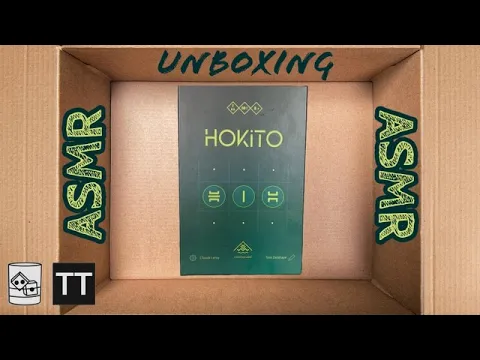
Mainly reviews. Hokito is covered on BoardGameVideo.com by 4 reviews, 2 how-to-play guides, and 1 unboxings.
2 players
6 - 20 min
Light weight: Learn it in minutes
From BoardGameGeek
In Hokito, you want to dominate the opponent's pieces--and possibly your own!--to create valuable towers that will score for you at game's end. Each player has 18 pieces--six each with 1, 2, or 3 mark--with one player taking black pieces and the other white. Gameplay takes place on a 6x6 board. To set up, you each spread your 18 pieces at random on your half of the board. The black player begins. On a turn, choose a piece or a stack of more than one piece that you control--you control a piece/stack if your color is on top--then move that piece/stack so that it lands on something of the same type, i.e., a single piece needs to land on a single piece and a stack on a stack. You move the piece/stack orthogonally 1-3 steps to occupied fields, with the number of steps matching the number of marks on the topmost piece. You can move the piece/stack at a 90º angle with each step (at an occupied field), so a piece/stack that moves 2 steps can go straight to the second occupied field or it can make a single 90º turn as it passes over the first occupied field. As more spaces become empty, fewer movement options remain open to players, and as soon as any one player cannot move, the game ends. Each player then scores for the pieces and stacks they control. The value of a piece/stack is the number of marks on the topmost piece multiplied by the number of pieces in that stack, which means a piece on its own is worth only 1-3 points. Whoever has the higher score wins.
Watch first
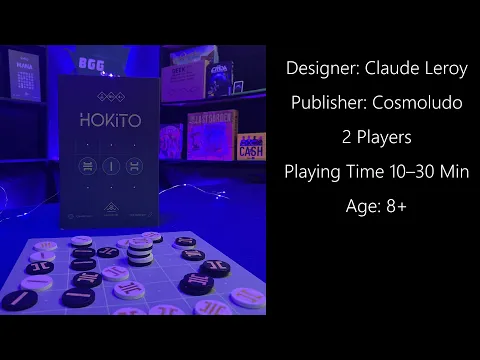
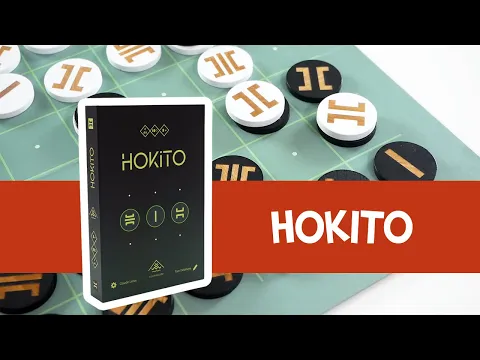
Which Hokito video should I watch?
Hokito has 7 videos from 6 creators: 4 reviews, 2 how-to-play guides and 1 unboxing. They date from 2021 to March 2026.
To learn the rules, start with "In Store! Hokito" by A Gateway Gamer Runsthru, which runs 28 min.
For an opinion before you buy, start with "Hokito - Présentation du jeu" by Dés en Mousse. 4 creators have reviewed it.
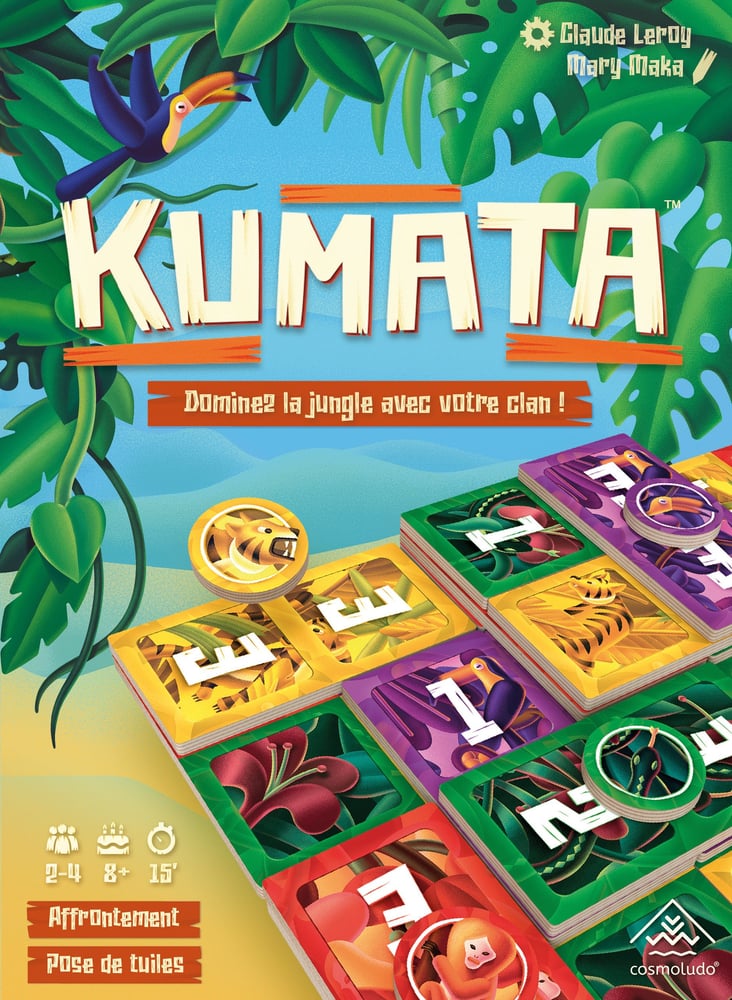
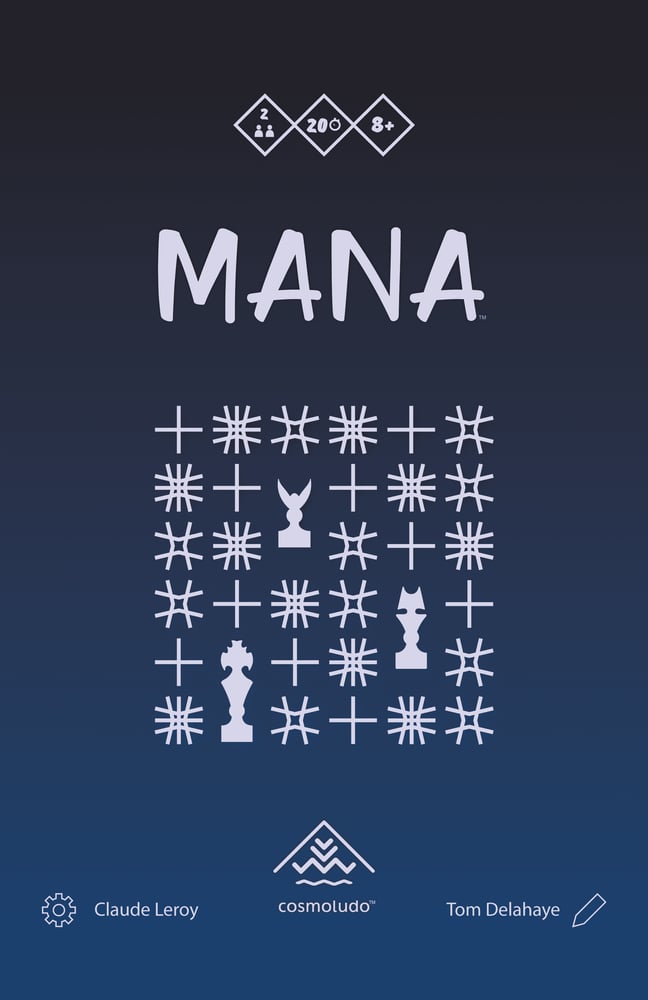
If you like it, try Kumata, Mana and Pantareï, also by Claude Leroy, or Kronologic: Paris 1920, which shares several of its mechanics.
All videos



Creators who cover this

Tabletop Tastings
2 videos of this game

A Gateway Gamer Runsthru
1 video of this game

Dés en Mousse
1 video of this game

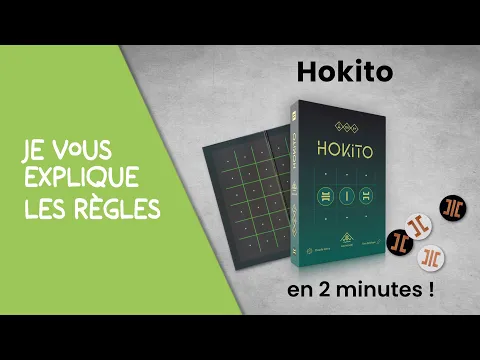
Je vous explique les règles
1 video of this game

SpieleBlog
1 video of this game

The Dice Tower
1 video of this game
Games like this

2024Fabien Gridel, Yoann Levet
- Videos
- 33
- Creators
- 29
Mainly reviews
1 - 4 players30 minMedium weight
About Hokito
From BoardGameGeek:
In Hokito, you want to dominate the opponent's pieces--and possibly your own!--to create valuable towers that will score for you at game's end. Each player has 18 pieces--six each with 1, 2, or 3 mark--with one player taking black pieces and the other white. Gameplay takes place on a 6x6 board. To set up, you each spread your 18 pieces at random on your half of the board. The black player begins. On a turn, choose a piece or a stack of more than one piece that you control--you control a piece/stack if your color is on top--then move that piece/stack so that it lands on something of the same type, i.e., a single piece needs to land on a single piece and a stack on a stack. You move the piece/stack orthogonally 1-3 steps to occupied fields, with the number of steps matching the number of marks on the topmost piece. You can move the piece/stack at a 90º angle with each step (at an occupied field), so a piece/stack that moves 2 steps can go straight to the second occupied field or it can make a single 90º turn as it passes over the first occupied field. As more spaces become empty, fewer movement options remain open to players, and as soon as any one player cannot move, the game ends. Each player then scores for the pieces and stacks they control. The value of a piece/stack is the number of marks on the topmost piece multiplied by the number of pieces in that stack, which means a piece on its own is worth only 1-3 points. Whoever has the higher score wins.
Designer
Claude Leroy
Artist
Tom Delahaye
Publisher
Cosmoludo
Categories
Mechanics
Area MovementGrid Movement